22 June 2026
Is the en-bloc lottery warming up again? What owners of older condos should know
Every few years, Singapore rediscovers the en-bloc dream: an ageing condo, a developer's cheque, and owners walking away with windfalls. After a long quiet spell, the numbers say the market is waking up again — and if you own an older private property, it's worth understanding why, calmly, before anyone starts talking about lotteries.
What's actually happening
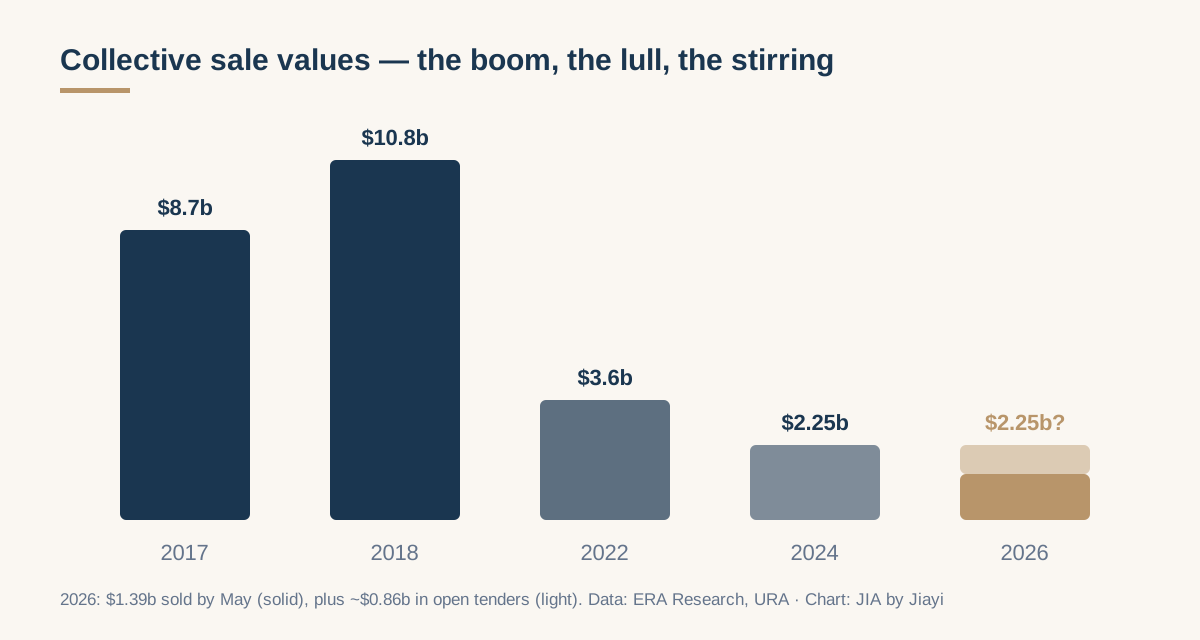
By May this year, about $1.39 billion of collective sales had already transacted — headlined by Loyang Valley at $880 million. With High Point Orchard ($580m asking) and Balestier Regency ($225m asking) in open tender, 2026 could reach around $2.25 billion. That's no 2017/2018 boom ($8.7b and $10.8b — those were wild years), but it would match the best totals since.
Why developers are looking again
For years, developers preferred Government Land Sales — cleaner, faster, fewer surprises. But GLS has become crowded and expensive: more bidders per site, rising land rates, and several precincts (Lentor, River Valley, one-north) now well supplied. When the straightforward route gets pricey, the complicated route starts looking reasonable again.
En-bloc sites offer what GLS can't: freehold land, mature-estate locations where no fresh government land exists, and older sites that aren't using their full plot ratio — meaning a developer can build more homes than currently stand there. From my corporate real estate years, I can tell you this is exactly how acquisition teams think: it's a numbers decision, not a sentimental one.
Why owners are more open to selling
Here's the other half of the story. If your development is 30+ years old, you're likely feeling it: rising maintenance fees or special levies, ageing lifts, seepage, dated facilities — while lease decay slowly works on your resale value. For many owners, an en-bloc offer is less "striking the lottery" and more a practical exit at a fair premium before those issues bite harder.
Remember: a sale needs 80% consent by share value and strata area (90% if the development is under 10 years old), and the deal only happens if the price works for both sides. Developers today are disciplined — they'll pass on anything overpriced, as the long-stalled mega-sites show.
Insights — what this means for you
- Own an older condo? Don't wait for a collective sale committee to tell you what your home is worth. Understand your development's redevelopment maths now — plot ratio headroom, tenure, location appeal — so any offer can be judged against facts, not excitement.
- A windfall is only half a plan. The payout sounds great until you price your replacement home in today's market. I've seen owners vote yes, then struggle to buy back into their own neighbourhood. Work out the "what next" before you sign the collective sale agreement.
- Buying an older resale condo? En-bloc potential can be genuine upside, but never pay for it as if it's guaranteed — most candidates never transact. Buy the home on its own merits; treat redevelopment as a bonus.
- Selling ahead of the wave? Renewed en-bloc chatter in your district can lift buyer sentiment for older projects. If you've been thinking of selling anyway, this is a sensible window to get a proper valuation.
If your development is talking about a collective sale — or you just want to know where your property stands — I'm happy to walk through the numbers with you, no drama included.
Market data from ERA Research & Market Intelligence (original article).